Corporate giving
 Sponsorship
 Legacy giving
 Donate most needed food
 First Responders to Food Bank 365
 EAT 365
 Host a food and fund drive
 Volunteer
 Events
 Advocate
 Mobile Pantry
 Food Recovery program
 Feed Collaboration
 Fresh Approaches Food Centre
 Perishable hamper line
 Community Food Assistance Network
 Our team
 Community Food Assistance Network
 Plans and reports
 Careers
As published in The Record on November 24, 2025.
Every year, when we release The Food Bank of Waterloo Region’s Community Impact Report, I hope to share some good news—that fewer people need our help, that more families are getting ahead.
This year, we did see one glimmer of hope: slightly fewer families are visiting food hamper programs. It’s a modest shift, but one worth celebrating. It suggests that, for some households, circumstances may be stabilizing—or community supports are helping them make ends meet a little longer.
But overall, the numbers still tell a difficult story.
Between July 2024 and June 2025, The Food Bank of Waterloo Region distributed a record-breaking 9.6 million pounds of food through 61 partner organizations in the Community Food Assistance Network—a seven per cent increase over the previous year—supporting nearly 73,000 people experiencing food insecurity.
Behind every one of those numbers is a person—a story. A family picking up a hamper at All Saints’ Anglican in Waterloo. A young mother preparing a meal at Marillac Place in Kitchener. Kids grabbing nutritious snacks at Adventure4Change in Waterloo. A refugee finding comfort in a warm meal at The Cambridge Vineyard Christian Fellowship.
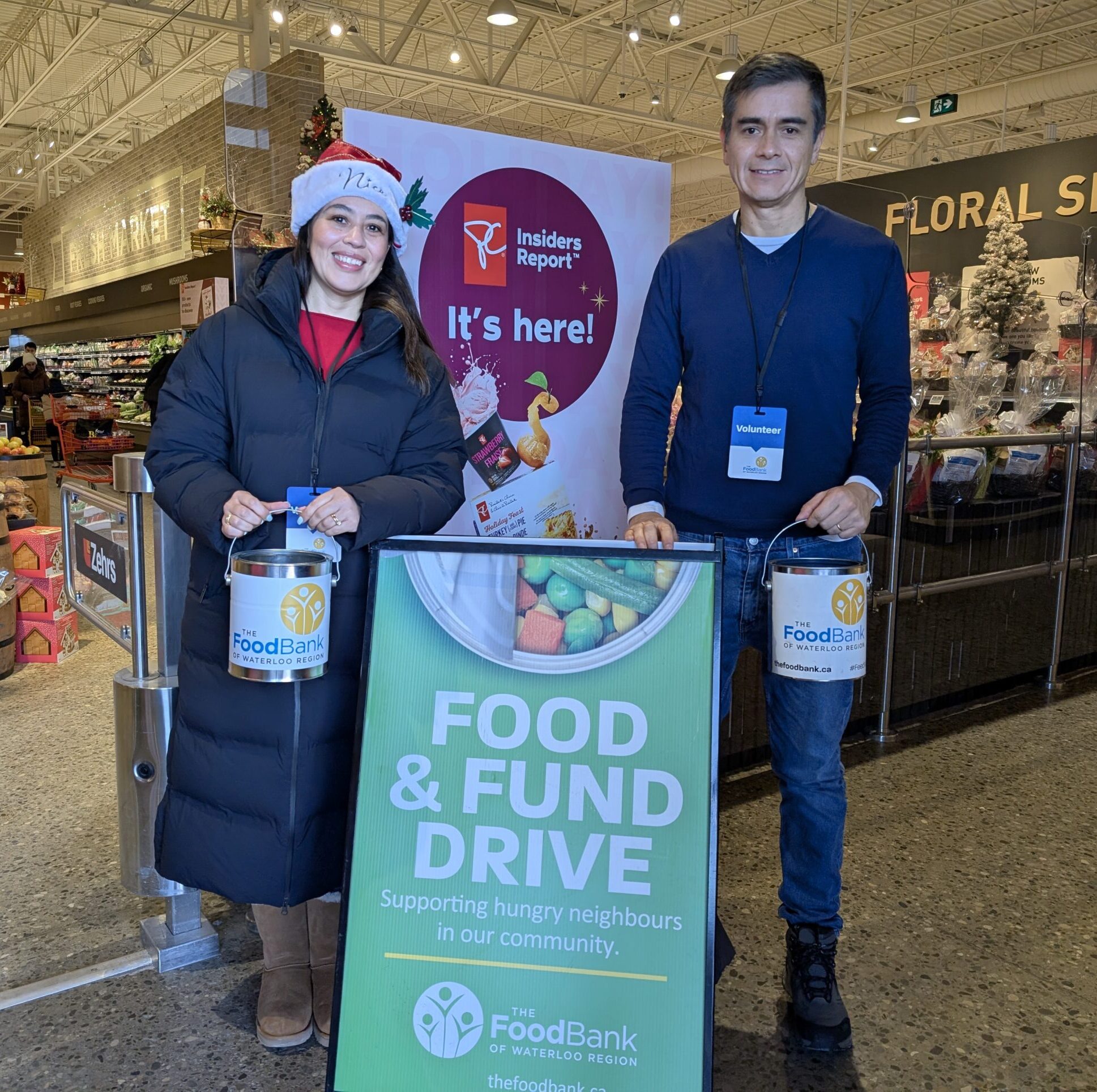
This is what food assistance looks like in our community. It’s personal. It’s human. And it’s only possible because of generosity—people like you donating food, funds, and time.
Every food item and every dollar makes a difference. Food donations add variety and keep our shelves stocked. Financial gifts help us fill gaps, keep our warehouse running, and fuel our trucks. And with the support of 4,800 volunteers—sorting, packing, delivering—we’re able to reach every corner of the region.
Even with these bright spots, the need remains high. While slightly fewer individuals visited food hamper programs, overall visits still reached 621,854—the highest number we’ve ever recorded. Since 2019, total visits are up 205 per cent. And for many, food assistance has become a long-term necessity. More than 7,000 households accessed a hamper program over eight times last year—a 21 per cent increase.
Rising housing costs, wages that don’t keep pace with inflation, and social assistance that doesn’t meet basic needs continue to push people to rely on emergency food programs.
Food banks provide critical short-term relief, but we can’t solve the root cause of food insecurity: poverty. Real change requires bold, systemic action—affordable housing for all, wages that reflect the true cost of living, and social assistance rates that allow people to live with dignity.
Until then, we’ll keep doing what we do best—working alongside our Network partners to make sure no one in Waterloo region goes hungry.
Our 2025 Community Impact report also shines a light on the people who make this work possible: Alicia, one of our monthly donors; Kevin, a dedicated volunteer; and Temple Shalom, a Waterloo synagogue that organizes an annual food and fund drive. Their stories remind us that hope grows stronger when a community comes together.
I invite everyone to read the full report at thefoodbank.ca/communityimpact. You’ll see what your generosity makes possible—and how, together, we’re helping ensure that everyone in Waterloo region has access to the food they need, whenever they need it.
Kim Wilhelm, CEO, The Food Bank of Waterloo Region
Join the conversation
Share this article on social media!