Corporate giving
 Sponsorship
 Legacy giving
 Donate most needed food
 First Responders to Food Bank 365
 EAT 365
 Host a food and fund drive
 Volunteer
 Events
 Advocate
 Mobile Pantry
 Food Recovery program
 Feed Collaboration
 Fresh Approaches Food Centre
 Perishable hamper line
 Community Food Assistance Network
 Our team
 Community Food Assistance Network
 Plans and reports
 Careers
April 22 is Earth Day, a worldwide environmental movement advocating for sustainability and climate action. Reducing food waste is a simple way that everyone can participate in Earth Day and can help extend the life of your grocery essentials.
Food waste is a big problem here in Canada and around the world. According to the National Zero Waste Council, half of all food produced globally is not eaten. In Canada, more than a third of food produced and distributed is not eaten. This is not only a waste of resources and a contributing factor to greenhouse gas emissions, but it’s a waste of money too. Every year, the amount of food that’s thrown out combined with the expenses to produce that food costs the Canadian economy up to $100 billion!
It’s concerning that so much edible food is being wasted when it could go to people in our community experiencing hunger. That’s why reducing food waste is a top priority at The Food Bank of Waterloo Region. We have several initiatives that help reduce food waste while simultaneously provide our community with safe, healthy, and nutritious meals. In 2018, we opened the Fresh Approaches Food Centre, our award-winning, onsite food processing facility. In this space, volunteers and staff safely repackage and freeze large fresh food donations that come from farmers, restaurants, retailers, distributors, and manufacturers. This process maximizes produce donations, extends their life span, and increases the amount of fresh, healthy food distributed to the more than 120 agency partners and community programs providing direct food support to people in need through the Community Food Assistance Network. To date, over 500,000 pounds of food—that otherwise may have ended up in a landfill—has been processed in the Fresh Approaches Food Centre.
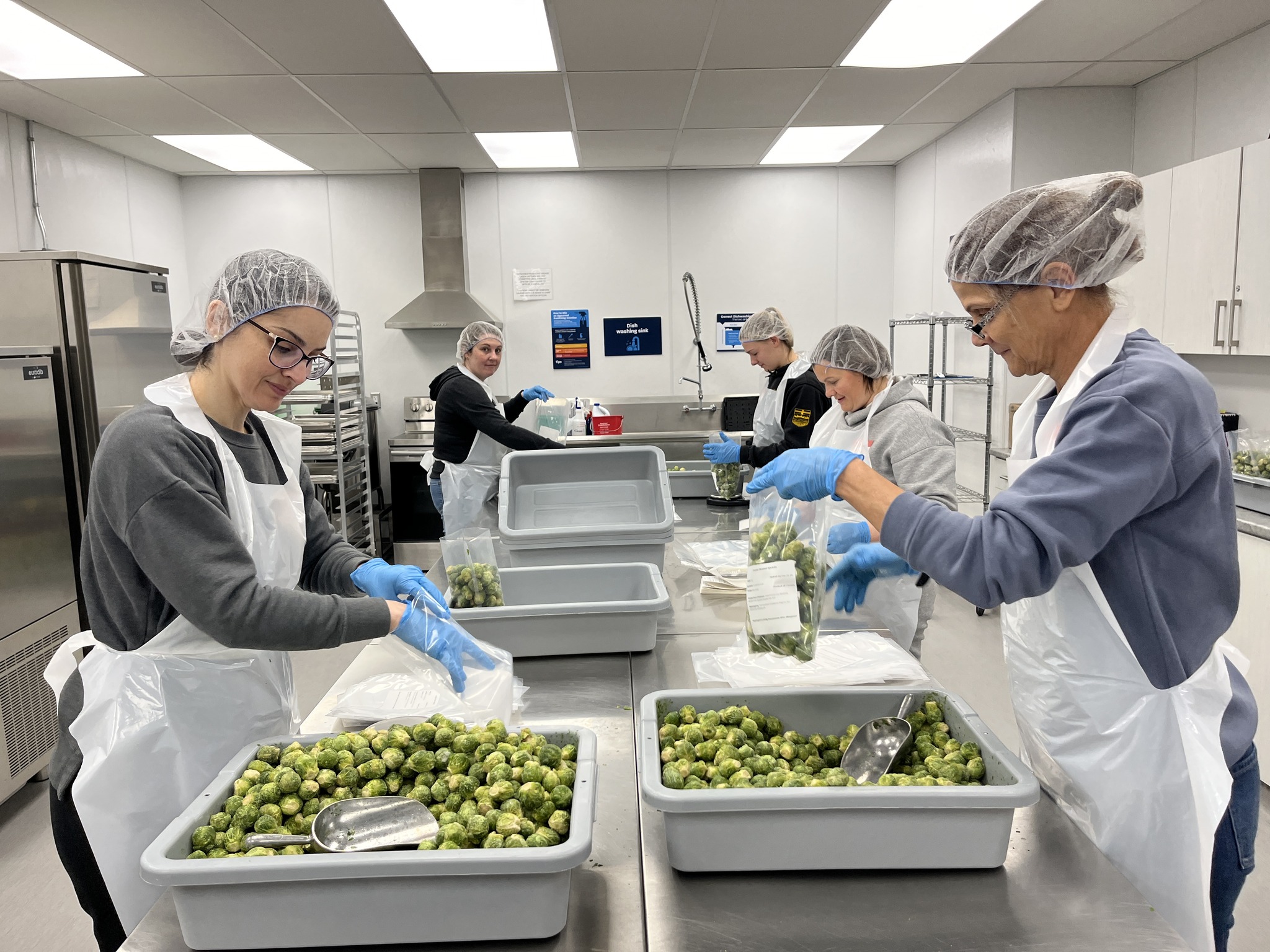
Volunteers in the Fresh Approaches Food Centre at The Food Bank.
In 2019, we furthered our commitment to reducing food waste by launching our Food Recovery program. As part of this program, we work with farmers, restaurants, retailers, distributors, and manufacturers. By working together, we can prevent food that our partners can no longer sell from being thrown out and instead redirect this surplus edible food to help feed the one in 10 households in Waterloo region struggling to afford to put food on the table. Last year, our Food Recovery program stopped over 3.8 million pounds of food from being thrown out! It’s even more incredible to know that all that food was redirected to the more than 58,600 people in Waterloo region accessing food assistance.
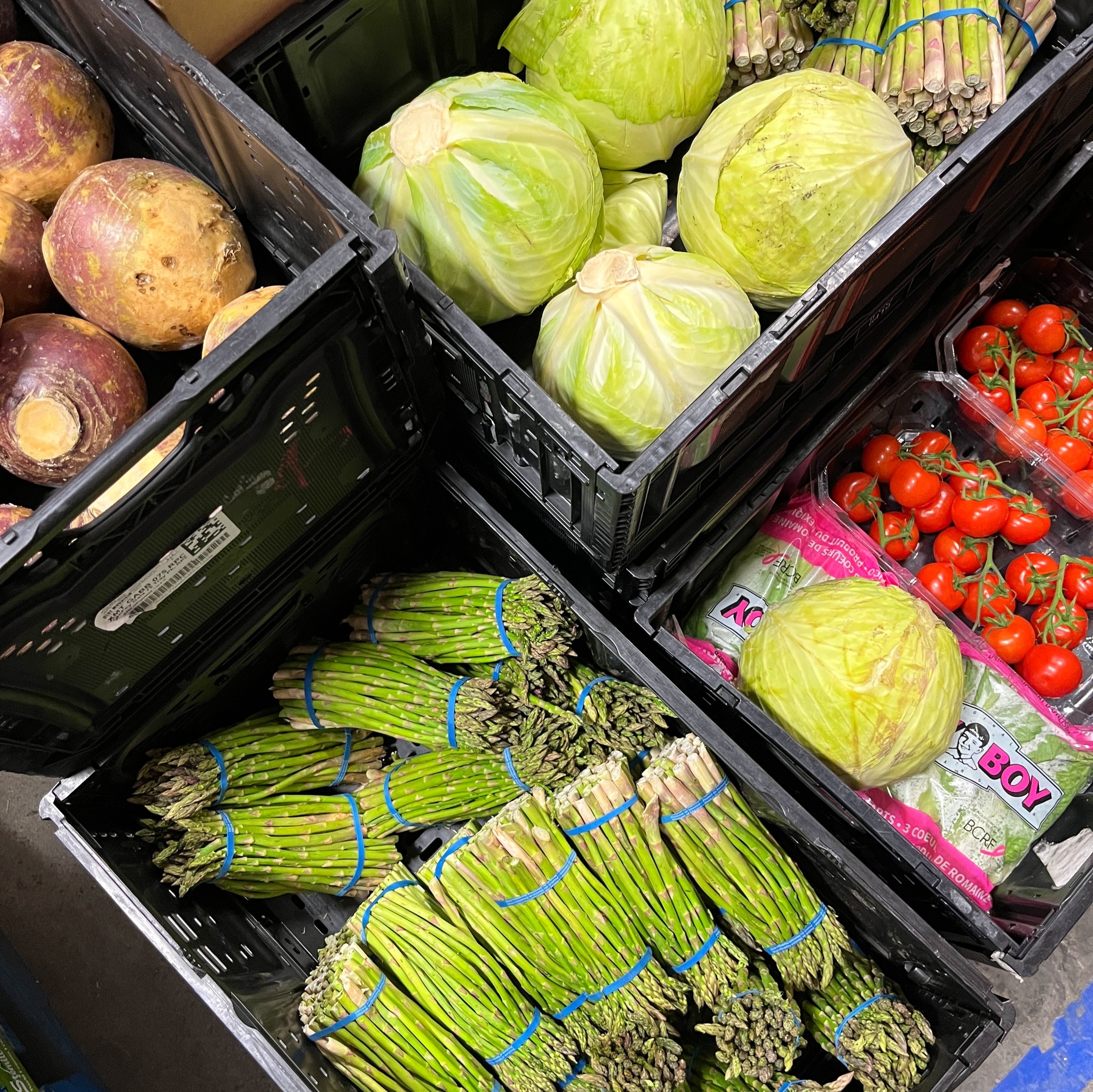
Fresh produce that will go to people in need.
At The Food Bank, we also strive to raise awareness about the difference between expiry and best before dates. Many people mistakenly use these terms interchangeably when they mean two different things. A best before date simply indicates how long a food product will remain at its best quality in terms of taste and texture. It doesn’t determine whether a product is safe to eat or not. In other words, you can eat foods with best before dates that have passed. An expiration date is different, as it outlines the last day a product is safe to eat. As such, foods with expiry dates should never be eaten after the expiration date because there may be a risk of bacterial growth, spoilage, and/or loss of nutritional value.
As an affiliate of Food Banks Canada, we’re committed to following Food Banks Canada guidelines to ensure everyone can access quality food. A summary of the guidelines we follow are below:
- Cans can be distributed up to 2 years past
- Boxes and bagged items can be distributed up to 1 year past
- Salad dressings and mayonnaise can be distributed up to 6 months past
- Natural peanut butter and tetra packs can be distributed up to 3 months past
- Baby food, formula, and meal replacements cannot be used after the expiry date
You can follow these guidelines in your own home to reduce the amount of food you waste and make the most of the groceries you buy. You can also keep these guidelines in mind when donating non-perishable food to The Food Bank. Here are some additional tips to help you minimize food waste.
5 tips to help you minimize food waste
- Plan your meals. Set aside time each week for meal planning and make it part of your weekly routine. This allows you to buy only what you need and avoid purchasing items that may go to waste. Feel free to use our Meal Planning Tool to brainstorm what you’re going to eat each day of the week.
- Make a shopping list. Before going to the grocery store, make a list of the items you need for the meals you plan to make. Stick to your list to avoid impulse purchases that could lead to food waste.
- Buy only what you need. Avoid buying in bulk unless you know you will use the items before they spoil.
- Store food properly. Food can go bad quickly if not stored at the appropriate temperature. Use airtight containers, keep produce in the refrigerator, and store items according to their recommended temperature and humidity levels.
- Freeze excess food. If you have food that you won’t be able to eat before it spoils, consider freezing it for later use. Many foods can be safely frozen, including meats, fruits, vegetables, and cooked meals.
We all have a role to play in reducing food waste. This Earth Day, we invite you to follow these guidelines and tips to reduce the amount of food you throw away.
If you’re a local business, restaurant, farmer, food retailer, distributor, or manufacturer who is interested in donating edible food, visit our Food Recovery page to learn more about our donation criteria.
Join the conversation
Share this blog post on social media!