Corporate giving
 Sponsorship
 Legacy giving
 In memoriam
 Donate most needed food
 First Responders to Food Bank 365
 EAT 365
 Ways to give
 Host a food and fund drive
 Volunteer
 Events
 Advocate
 Get involved
 Mobile Pantry
 Food Recovery program
 Feed Collaboration
 Fresh Approaches Food Centre
 Perishable hamper line
 Our team
 Community Food Assistance Network
 Plans and reports
 Careers
Hunger in Waterloo region
Read the Community Impact reportA snapshot
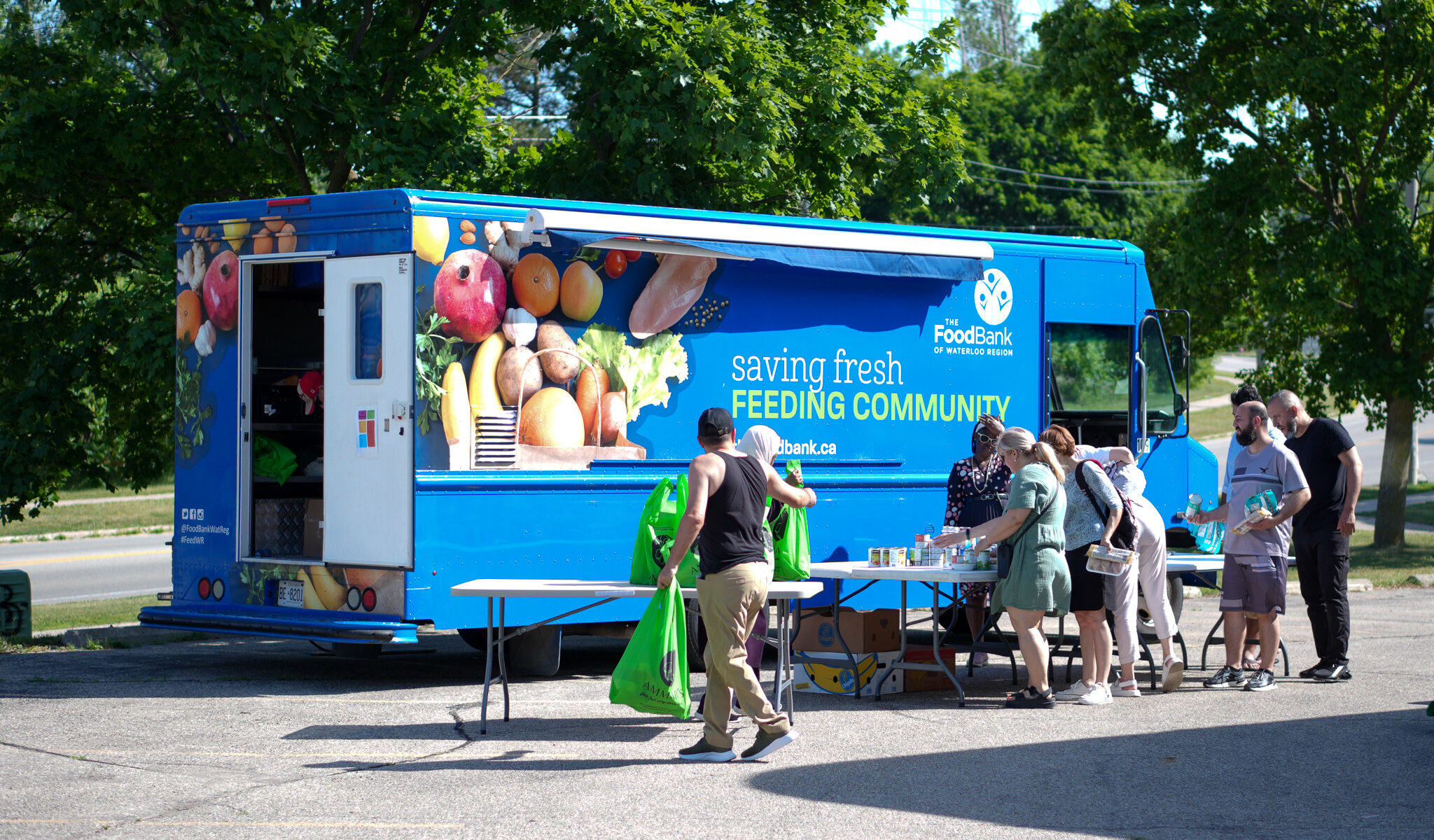
Between July 1, 2024 and June 30, 2025, nearly 73,000 adults and children in Waterloo region accessed food assistance through the Community Food Assistance Network. There were close to 622,000 visits to food hamper programs—a 205 per cent increase since 2019 and the highest number ever recorded.

Vision
A Waterloo region where no one experiences hunger.

Mission
Through community collaboration, we obtain and distribute essential food from our neighbours for our neighbours.
Did you know?
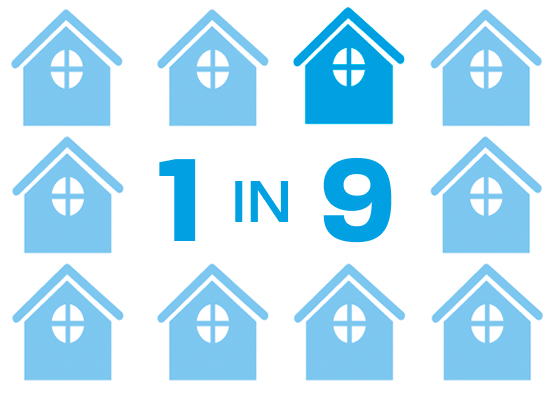
1 in 9 households rely on food assistance
This means more than 27,000 households across Waterloo region struggle to afford food and rely on food assistance to meet basic needs.
Food hamper programs
Visits to food hamper programs reached 621,854—an 11 per cent increase from the previous year and the highest number ever recorded. Even more concerning, 7,066 households accessed a hamper program more than eight times—a 21 per cent increase from the year before.
These numbers show that food assistance is no longer a short-term solution for temporary hardships. Rising housing costs, stagnant wages, and inadequate social supports are forcing more people to rely on emergency food programs long-term.
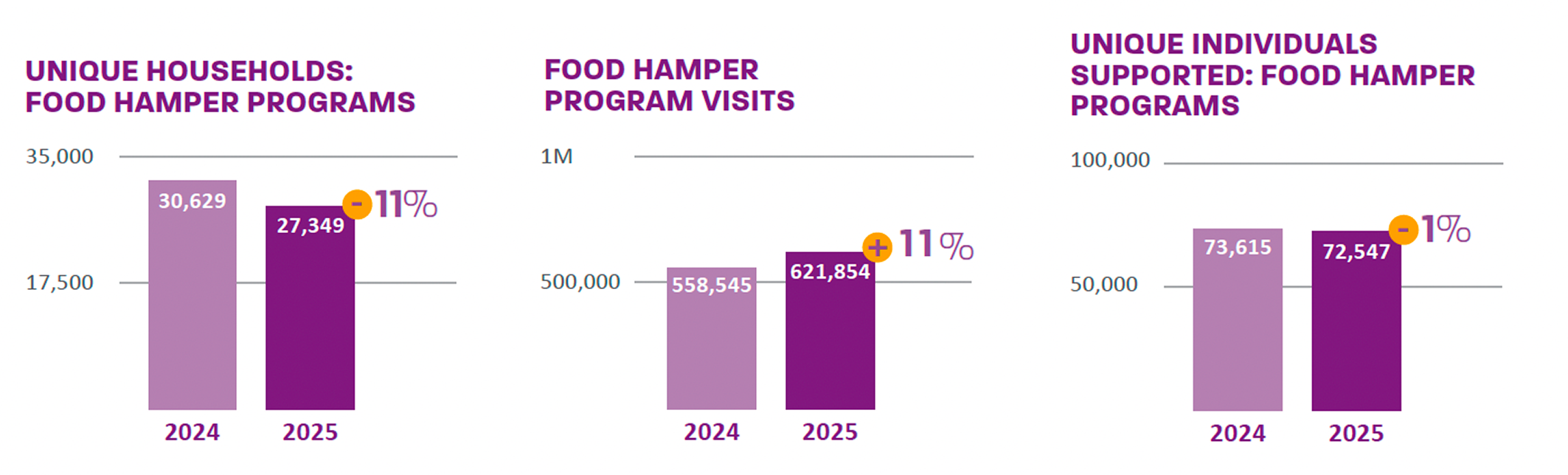
Nearly 622,000 visits
What that looks like in our community

1,703
people through the door every day

51 seconds
between participant visits during a standard 8-hour day

~12,000
visits every week across 61 locations in Waterloo region

+11%
increase in a single year—the highest total ever recorded
Who is accessing food assistance
Food insecurity affects people from all walks of life in Waterloo region.
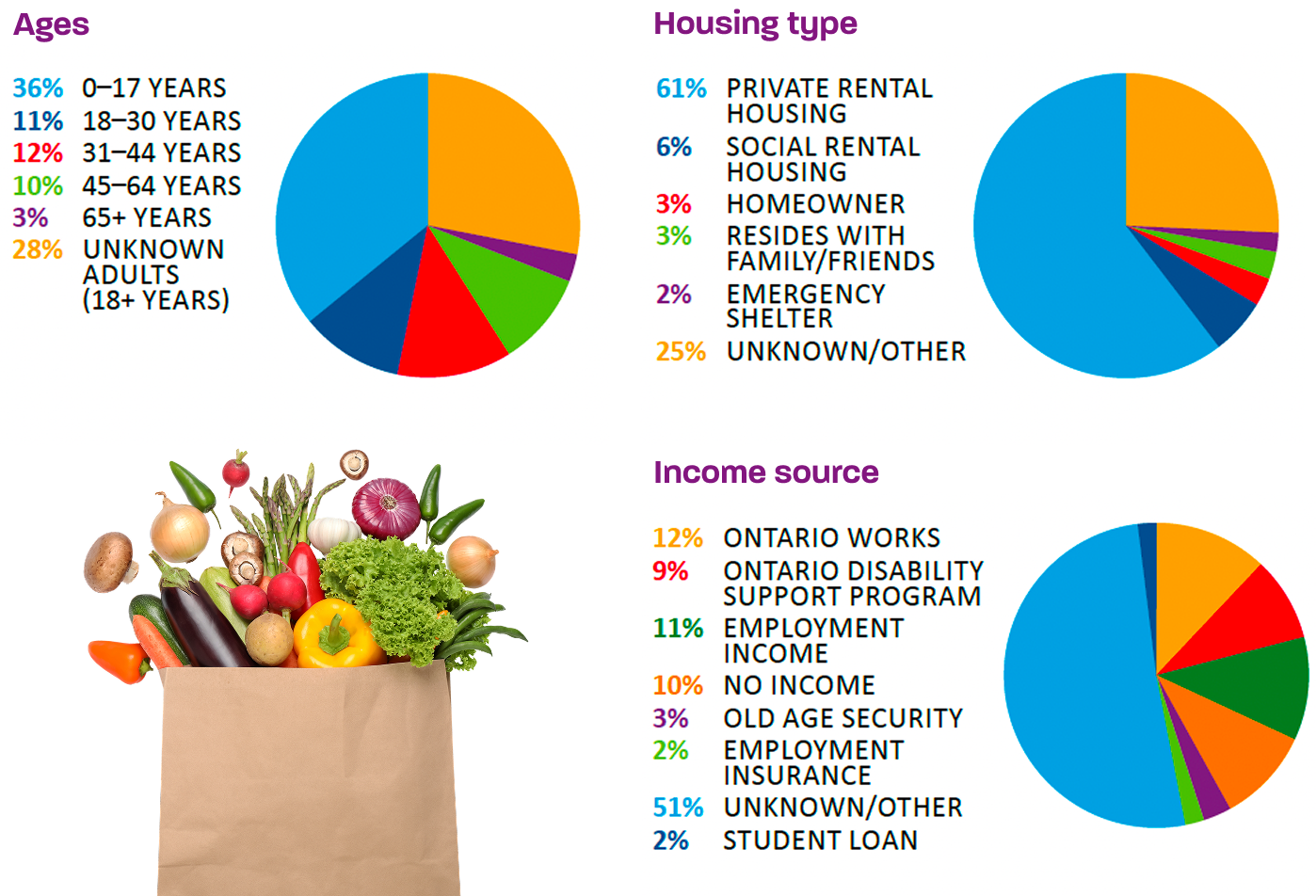
Over one-third (36%) of people receiving food assistance are children. That’s more than 26,000 kids living in food-insecure households across Waterloo region.
Sixty-seven per cent of households accessing food assistance reported renting their home, including those living in private rental housing (61%) and social rental housing (6%).
Twenty-one per cent of households reported receiving Ontario Works (12%) or Ontario Disability Support Program benefits (9%), yet still struggled to afford food.
Eleven per cent of households that reported an income source said they were employed but still did not earn enough to afford groceries.
No child should go hungry. Renters, working individuals, and those relying on essential government assistance should be able to afford to put food on the table. The fact that so many cannot points to a system that is failing to meet people’s basic needs.
Without the local Salvation Army food pantry and The Food Bank, I wouldn’t have enough food to get through the month. As a senior on a low income, I simply don’t have money left for food after paying my regular bills. I’m often nearly broke once everything is paid. I am thankful for the food pantries, but after working all my life, I shouldn’t have to depend on them.
Christine
In their own words
-
Caroline, a senior
“My pension doesn’t stretch the way it used to. Between rent and medication, there’s not much left for groceries. The Food Bank helps me get through the month without having to choose.”
-
Tess, a mom
Tess works part-time while managing cooking, cleaning, and childcare at home. With rising food costs, she carefully stretches her budget and relies on support to get by. “My small family relies on food assistance,” she says.
-
Jared, a construction worker
Jared picks up construction jobs when he can, but unstable income often forces him to stretch meals and depend on assistance between paycheques.

Let's talk about hunger
Help us raise awareness
Help us spread the word. Explore the links below and repost the content that resonates with you. Every share helps more people understand the realities of hunger in our own backyard and inspires support for neighbours who need it most.
Let's advocate together
Learn about advocacySee our posts on social media
Instagram X Facebook LinkedInRaise your voice


Want to learn more about hunger in Waterloo region?
You can find even more information about hunger in Waterloo region and how we’re fighting it in our downloadable Community Impact report PDF.